
Construction calculator
Bitumen Calculator
Estimate the total quantity of bitumen required for your road construction project, including asphalt mix content and tack coat spray rates.
Result
Bitumen calculator results
Your estimates will appear here
Enter your road dimensions and material specifications, then click Calculate to estimate bitumen quantities.
Total Bitumen Required
Calculated from area, compacted thickness, and asphalt density.
Binder inside the asphalt mix based on the selected bitumen percentage.
Unit summary
This calculator is a planning estimate. Material waste, compaction variation, project specs, and field conditions can change real bitumen requirements.
Calculator overview
Quick Bitumen Calculator Overview
Use this bitumen calculator to estimate binder quantity for roadwork, pavement, or surface treatment projects from area, thickness, density, and application rate. It helps turn site measurements into practical material estimates.
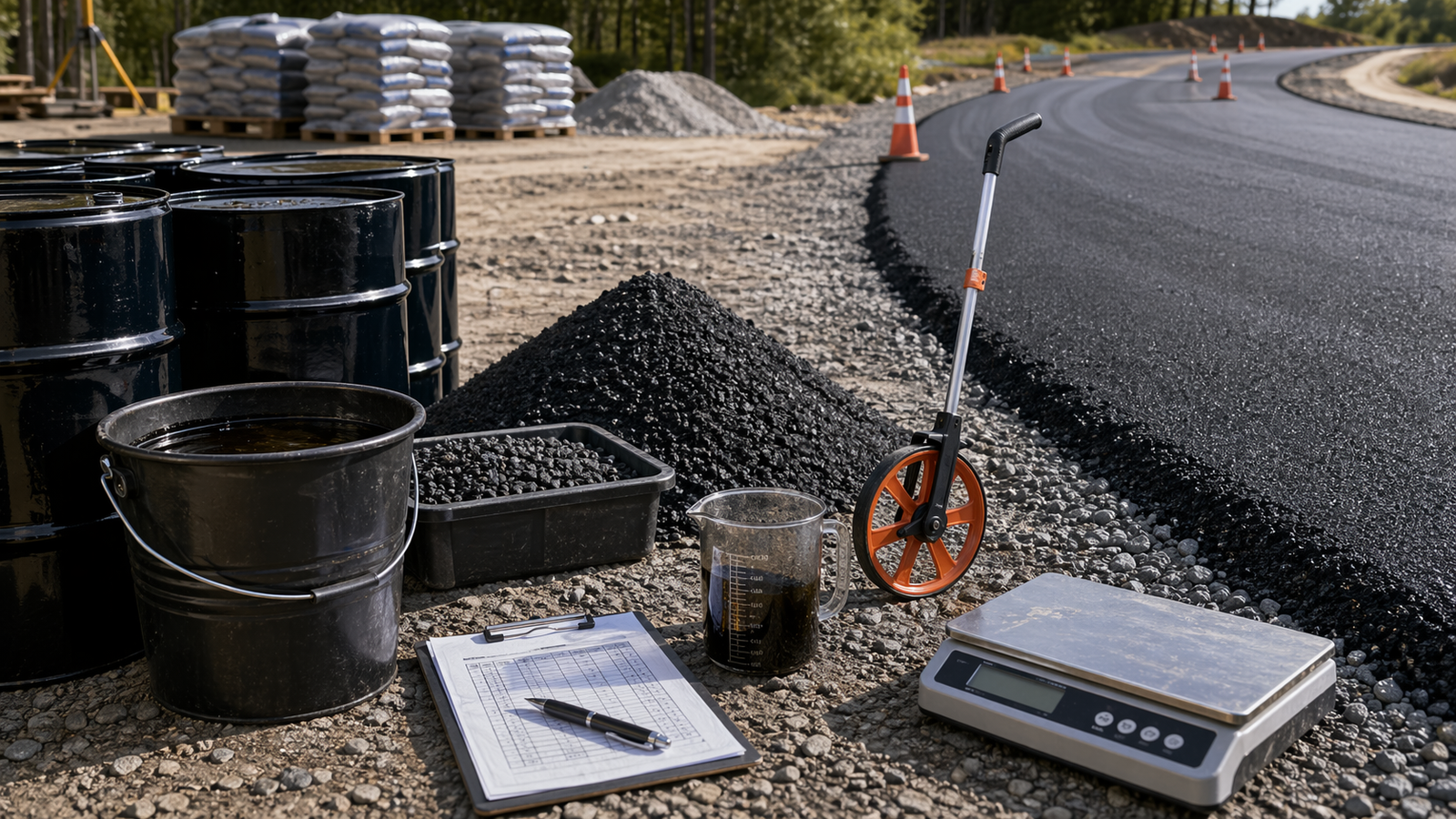
Enter the project area and bitumen assumptions above to estimate consumption before ordering or comparing quantities.
Guide
Bitumen Calculator Guide
Use this guide to understand how road area, asphalt thickness, mix density, binder percentage, and spray rates combine into a practical bitumen estimate for planning.
What is a Bitumen Calculator?
A bitumen calculator estimates how much bitumen is needed for a road or paved surface. It usually combines two parts of the job: the binder inside the asphalt mix itself and the sprayed binder used for a prime coat or tack coat.
This helps planners, estimators, students, and site teams compare material quantities before ordering or checking project specifications. It is useful for early-stage quantity planning, but it should not replace a mix design or project-specific material schedule.
Bitumen Calculation Formulas Explained
The calculator starts with area and thickness, converts those dimensions into asphalt mix volume, and then applies density and binder percentage to estimate the bitumen inside the mix.
Main mix formula
Bitumen in mix = area x thickness x density x (bitumen % / 100) AreaLength x width for the road section.
VolumeArea x compacted asphalt thickness.
Mix weightVolume x compacted asphalt density.
Spray binderArea x spray rate for the prime or tack coat.
In imperial mode, spray rates entered in gallons per square yard are converted into pounds using an assumed binder weight of 8.6 lb per gallon so the final estimate stays in weight units.
Standard Asphalt Density and Bitumen Percentages
A common planning density for compacted asphalt is about 2330 kg/m3, which is close to 145 lb/ft3. Many asphalt mix designs use a bitumen content near 5% by weight as a rough starting point for estimation.
Real projects can differ depending on aggregate size, mix design, temperature, compaction, and specification. Use project-approved values whenever you have them, and treat standard defaults as planning assumptions only.
Estimating Spray Rates for Prime and Tack Coats
Prime and tack coats are sprayed at project-specific rates that depend on surface condition, absorbency, texture, and the binder being used. A rough surface or dry base may need more material than a dense, well-prepared surface.
Tack coats are usually lighter and are meant to improve bonding between layers. Prime coats are generally used on prepared granular bases and can require higher application rates depending on the specification.
Planning note
If you only need the binder inside the asphalt mix, you can set the spray rate to 0 and calculate a mix-only estimate.
How to Use This Estimator
- 1Choose metric or imperial
Select the unit system that matches your project measurements and specs.
- 2Enter road dimensions
Add the paved length and width for the section you want to estimate.
- 3Enter mix properties
Add asphalt thickness, density, and binder percentage for the asphalt mix.
- 4Add the spray rate
Use your prime or tack coat application rate for the surface spray estimate.
- 5Click Calculate
Review total bitumen required, total mix required, and the split between mix binder and spray binder.
Road section 1000 m x 7.5 m Thickness 50 mm Density 2330 kg/m3 Binder content 5%
Example total bitumen
46.69 metric tons 46,688 kg total bitumenFAQ
Frequently Asked Questions
Clear answers about bitumen quantity, density, binder content, and prime or tack coat estimates.
What is the standard quantity of bitumen per square metre?
The spray quantity per square metre depends on the coat type, surface texture, temperature, and project specification. Tack coats often use lighter application rates than prime coats, so always check the job spec instead of relying on one universal number.
How much bitumen is typically in an asphalt mix?
Many asphalt mixes fall near 4% to 6% binder content by weight, but the exact percentage depends on the mix design, aggregate gradation, traffic demands, and project requirements.
What is the difference between a prime coat and a tack coat?
A prime coat is applied to a prepared base to seal and prepare the surface before paving. A tack coat is usually sprayed between asphalt layers to improve bonding.
What is the standard density of compacted asphalt?
A common planning value is about 2330 kg/m3, which is close to 145 lb/ft3 in imperial units. Actual density should be based on the mix and project specification when accuracy matters.
Does this calculator account for material waste?
No. This estimator gives a base quantity from the inputs you provide. Add extra allowance separately if your project needs contingency for waste, overrun, or site-specific factors.