
Construction calculator
Top Soil Calculator
Use the Top Soil Calculator to estimate cubic yards, cubic feet, tons, bags, and cost for lawns, raised beds, turf, and topdressing projects.
Result
Topsoil calculator results
Your results will appear here
Enter your values and click Calculate to see the result.
Adjusted topsoil to order
Total area
Selected depth
Base volume
Adjusted volume with waste
Calculation breakdown
The result follows the same area, depth, conversion, and estimate steps you would use by hand.
This calculator is a planning estimate. Weight, coverage, bag count, and cost can change with moisture, compaction, product size, and supplier pricing.
Calculator overview
Quick Top Soil Calculator Overview
Use this top soil calculator to estimate cubic yards, cubic feet, bags, or bulk weight from area and depth. It is designed for gardens, lawns, raised beds, and landscaping jobs where depth matters as much as surface area.
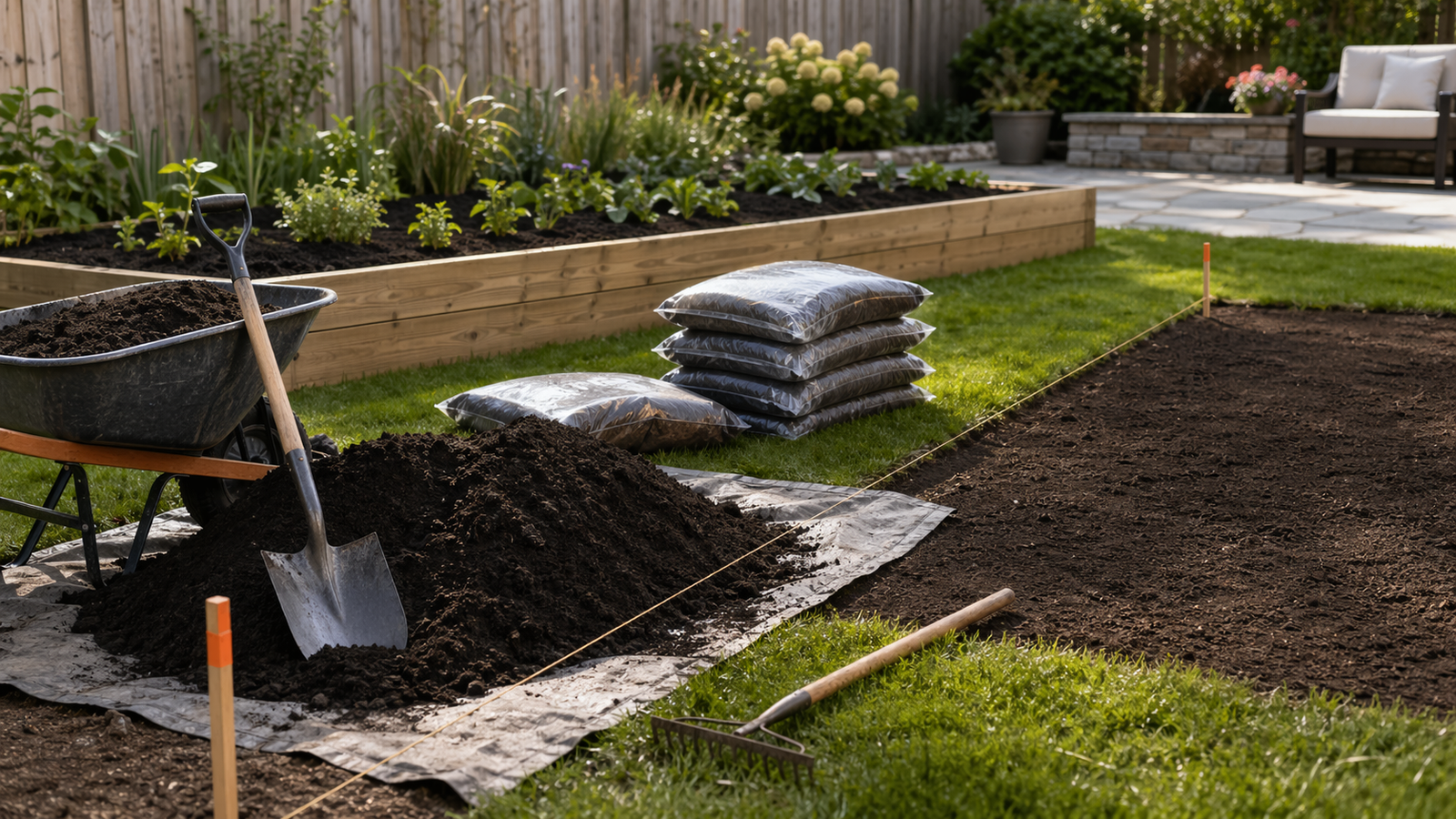
Enter the coverage area and desired depth to estimate how much topsoil to buy in bulk or bags.
Guide
Top Soil Calculator Guide
Use this guide to understand how topsoil quantity is measured, why depth changes coverage so quickly, and how the calculator turns area and depth into real purchasing units such as cubic yards, bags, tons, and cost.
What This Top Soil Calculator Does
This topsoil calculator estimates how much material you need from the area and depth of the project, then converts that result into practical ordering units such as cubic feet, cubic yards, cubic meters, estimated weight, bag count, and cost.
It works for general topsoil jobs, lawn repair, turf topdressing, compost-style topdressing, and raised-bed fills without splitting the page into five separate tools. The project preset simply improves the guidance and depth hints. The core math stays the same: area times depth equals volume.
Planning note
Weight is an estimate based on density assumptions. Wet or packed topsoil can weigh much more than loose topsoil, and bag size varies by product, so always confirm supplier details before ordering.
Topsoil Formula
The calculator uses simple geometry first, then converts the volume into the purchase unit that matters for the job.
Core workflow
area x depth = volume VolumeBase topsoil amount comes from the measured area multiplied by the selected depth.
Cubic yardsCubic feet divided by 27 gives the bulk-order quantity in cubic yards.
WeightVolume multiplied by density gives an estimated shipping or handling weight.
BagsAdjusted volume divided by bag volume gives bag count, which is rounded up for purchase planning.
The calculator uses the adjusted volume after waste for purchase planning. That keeps bag, weight, and cost estimates closer to a real order instead of just the exact geometric minimum.
How Coverage Works
Coverage changes with depth. A cubic yard of topsoil spreads much farther at a light topdressing depth than it does for deeper fill. That is why the same yard of topsoil can cover a large lawn patch at 1/4 inch, but a much smaller area at 3 or 4 inches.
This calculator shows the coverage tied to your selected depth so the result stays practical. Shallow layers are useful for turf or compost topdressing, while deeper fills are more common for lawn repair, grade correction, and raised beds.
How to Use the Calculator
- 1Choose the project type and shape
Select a preset for guidance, then pick rectangle, circle, triangle, or custom area.
- 2Enter the area measurements
Measure the project footprint carefully. If you already know the area, use the custom area option.
- 3Set the depth
Use a shortcut for common topdressing depths or enter the exact depth you want to spread or fill.
- 4Add optional assumptions
Choose a density preset, add waste, and enter bag volume if you want bag count.
- 5Add pricing if useful
Use cost per cubic yard, per ton, or per bag if you want purchase estimates.
- 6Click Calculate
Review total volume, weight estimate, bag count, cost options, and the step-by-step breakdown.
Example Calculation
Suppose a lawn area measures 500 square feet and needs a 3 inch topsoil layer. The base volume is 125 cubic feet, which is about 4.63 cubic yards before waste.
Project 500 sq ft lawn Depth 3 in Base volume 125 cu ft Bulk rate $42.00 per cubic yard
Example purchase estimate
5.09 cu yd With a 10% waste factor, this example also estimates about 69 bags to buy and shows bulk and bagged cost options side by side.This example uses the same logic as the live tool: area first, depth conversion second, then volume, weight, bag, and cost estimates from the adjusted purchase amount.
Tips / Notes
Round up when ordering
Bulk soil, bag counts, and delivery loads usually need a little margin so the job does not come up short.
Weight changes with moisture
Wet and packed topsoil can weigh much more than loose topsoil, which is why the weight output is an estimate.
Bag size matters more than bag weight
Coverage depends on volume, so use the actual bag volume from the product label when planning bag count.
Topdressing is shallow
Topdressing uses a much thinner layer than repair fill or raised-bed work, so depth choice changes the estimate fast.
Delivery and settling affect real orders
Bulk loads, grading loss, site conditions, and settling can all change how much material you actually need on the ground.
Topsoil for Lawns, Topdressing, and Raised Beds
Lawns and turf projects often need only a thin layer, especially when the job is topdressing rather than full soil replacement. Raised beds and deeper fill projects usually need much more volume because depth builds quickly across the full area.
That is why the calculator keeps the presets flexible instead of locking you into one rule. Measure the area, use the true depth you need, and treat the preset as guidance rather than hard agronomy logic.
FAQ
Frequently Asked Questions
Clear answers about cubic yards, coverage, weight, bags, topdressing depth, and raised-bed planning.
How do I calculate how much topsoil I need?
Measure the area, choose the depth, and multiply area by depth to get volume. Then convert that volume into cubic feet, cubic yards, or cubic meters depending on how you plan to buy the material.
How many cubic feet are in a cubic yard of topsoil?
One cubic yard contains 27 cubic feet. That is why many topsoil estimates divide cubic feet by 27 when converting the result into cubic yards.
How much does one cubic yard of topsoil weigh?
It depends on density, moisture, and compaction. A loose cubic yard of topsoil can weigh much less than a wet or packed cubic yard, which is why this calculator treats weight as an estimate rather than a fixed rule.
How much area does one yard of topsoil cover?
Coverage depends on depth. One cubic yard spreads farther at a shallow layer and covers less area at deeper fill depth. This calculator shows coverage at your selected depth so the estimate stays tied to the actual job.
How deep should topsoil be for lawn topdressing?
Topdressing is usually very thin, often around 1/8 inch to 1/4 inch for turf and about 1/4 inch to 1/2 inch for compost-style lawn topdressing. Exact depth depends on the lawn condition and the material you are applying.
How do I estimate bags of topsoil?
Use the total required volume and divide it by the bag volume. Bag size matters more than bag weight for coverage, so this calculator asks for bag volume and rounds up the purchase count.
Is this calculator good for raised beds?
Yes. Choose the raised bed preset, measure the full bed area, and enter the actual fill depth. The calculator works well for both shallow and deep bed fills as long as the dimensions are measured correctly.