
Construction calculator
Siding Calculator
Use the Siding Calculator to estimate siding square footage, siding squares, panels, planks, and project cost for vinyl, fiber cement, metal, wood, and more.
Result
Siding calculator results
Your results will appear here
Enter your values and click Calculate to see the result.
Waste-adjusted siding to order
Gross wall area
Opening deductions
Net siding area
Waste-adjusted area
Calculation breakdown
The estimate follows the same wall-area, waste, coverage, and cost steps you would use by hand.
This siding calculator is a planning estimate. Profile coverage, waste, labor, trim details, tear-off, and regional pricing can change the real project total.
Calculator overview
Quick Siding Calculator Overview
Use this siding calculator to estimate siding squares, panels, trim, waste, and installation cost from wall dimensions and openings. It helps homeowners and contractors turn exterior measurements into order-ready quantities.
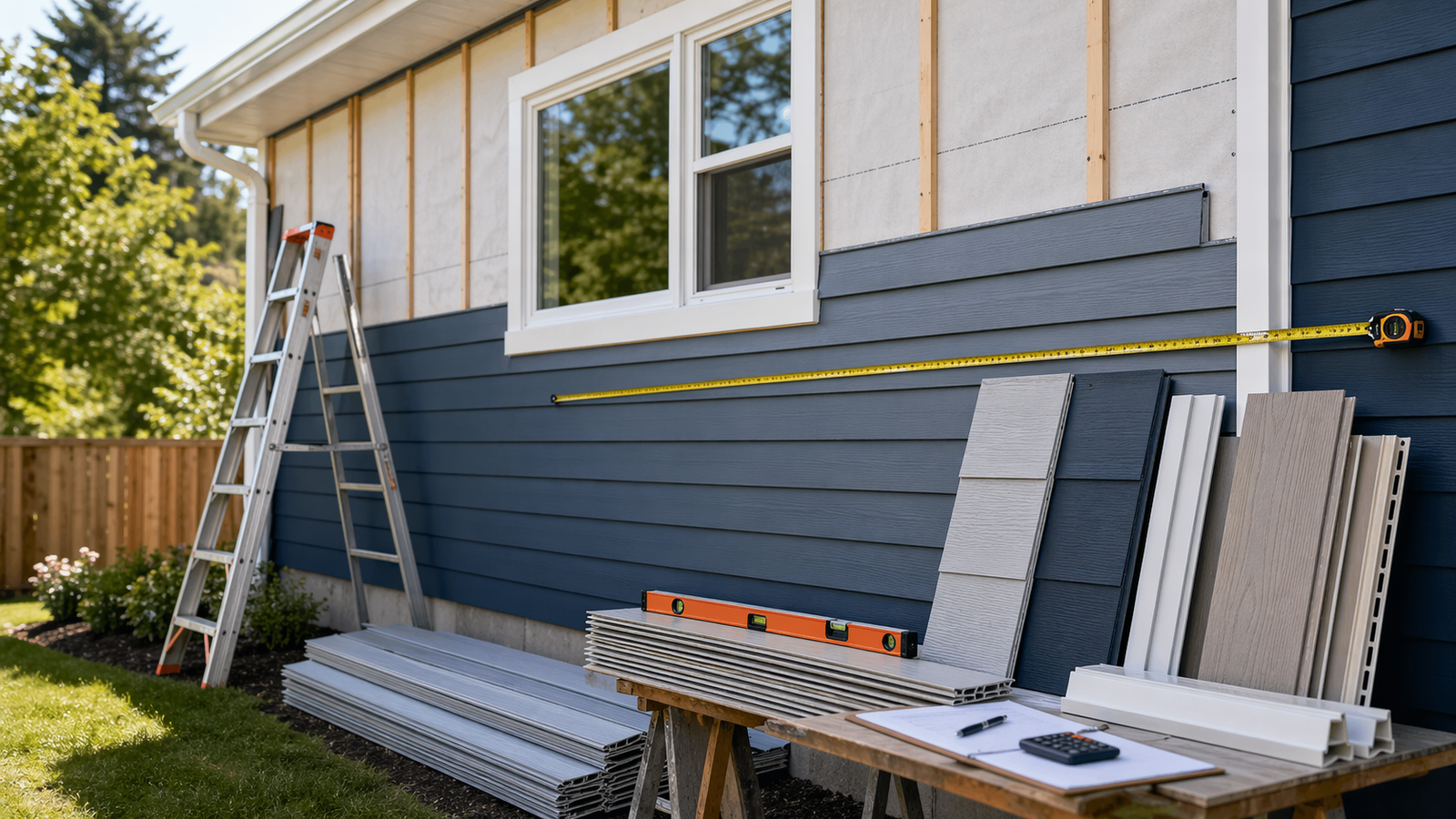
Enter wall sizes, openings, material type, and waste allowance to estimate siding coverage and cost.
Guide
Siding Calculator Guide
Use this guide to understand how siding area is measured, how siding squares work, why coverage changes by profile, and how the calculator turns wall area into practical material and cost estimates.
What This Siding Calculator Does
This siding calculator estimates exterior siding area, opening deductions, waste-adjusted order quantity, siding squares, unit counts, and practical planning costs for common siding projects. It can work as a vinyl siding calculator, a Hardie or fiber cement siding estimator, a metal siding calculator, and a general siding replacement cost calculator without splitting the page into separate brand-specific tools.
The calculator supports both quick total-area estimates and detailed wall-by-wall measurement. It can also convert the final siding area into pieces, planks, panels, or boxes when you provide a coverage method that matches the product you plan to install.
Planning note
Costs are estimates only. Coverage changes by profile, waste varies by layout, and replacement projects can include tear-off, disposal, housewrap, trim, and repair allowances that differ from job to job.
How Siding Square Footage Is Measured
Siding estimates start with wall area. Measure each wall, add gables or extra sections, subtract large openings if you want a tighter estimate, then apply a waste allowance before converting the total into siding squares or product quantity.
Core siding workflow
net area = gross wall area + extra sections - opening deductions Rectangular wallWidth x height
Triangular gable(Width x height) / 2
Waste-adjusted areaNet area x (1 + waste%)
Siding squaresAdjusted area in sq ft / 100
The siding square is always based on 100 square feet, but the way that square converts into pieces, planks, panels, or boxes depends on the specific coverage assumptions you enter.
Siding Squares and Coverage
A siding square is a useful planning shortcut, but it is not the whole story. Lap siding, panel siding, shake-style products, and vertical profiles do not all convert to the same panel count, because the installed coverage per unit changes with exposure, overlap, panel size, and box coverage.
That is why this estimator keeps the math coverage-driven instead of pretending that every vinyl, metal, or Hardie-style product uses the same universal count. If you only need siding squares, you can stop there. If you need pieces or boxes, add the matching coverage method.
Siding Cost Estimator for Vinyl, Fiber Cement, Metal, and Wood
Many siding calculator searches are really cost-estimator searches. This page can estimate siding square footage, convert it into siding squares or product units, and then apply material, labor, tear-off, repair, and accessory assumptions.
Use vinyl siding calculator results, Hardie-style fiber cement estimates, or metal and wood siding estimates as planning ranges. Final pricing still depends on product line, trim details, wall condition, local labor, delivery, and installer quote structure.
How to Use the Calculator
- 1Choose the project type
Select new installation, replacement, or repair patch so the guidance and cost logic fit the job.
- 2Pick the siding material and profile
Choose vinyl, fiber cement, metal, wood, or another material, then choose the profile that best matches the product.
- 3Measure the walls
Use simple total area for a quick estimate or wall-by-wall mode for rectangular walls, gables, and custom sections.
- 4Add deductions and waste
Subtract large openings if you want, then add a waste factor for cuts, trim-outs, and layout loss.
- 5Add coverage assumptions
Use siding squares only, or enter a piece, plank, panel, or box coverage method when you need a more specific quantity estimate.
- 6Add pricing and calculate
Review material, labor, tear-off, accessory, and total cost estimates in the result panel.
Example Calculation
Here is a sample replacement project with 1,350 square feet of wall area, 120 square feet of gable area, 170 square feet of opening deductions, and a 10% waste factor. The example also uses a fiber cement lap assumption of 16 pieces per siding square and a material price of $360.00 per square.
Gross area 1,470 sq ft Net area 1,300 sq ft Adjusted area 1,430 sq ft Siding squares 14.3
Example result
14.3 squares About 229 estimated planks and $13,743.00 for the cost estimate.This example shows why siding squares, unit coverage, and cost allowances work together. The waste-adjusted order quantity is higher than the exact net wall area because real installations need cuts, overlaps, and trim work.
Tips / Notes
Waste is part of siding estimating
Corners, starter rows, trim-outs, staggered joints, and layout changes all affect the real order quantity.
Coverage changes by profile
Lap, shake, shingle, vertical, and panel products do not all estimate the same way, even within the same material family.
Replacement work usually carries extra cost
Tear-off, disposal, damaged sheathing, and weather barrier work often matter more in replacement jobs than in new installation.
Repair estimates are less exact
Partial siding repairs can be affected by color match, availability, trim touch-up, and small-job labor minimums.
Vinyl, Fiber Cement, Metal, and Wood Siding Cost Factors
Vinyl siding cost calculators often focus on installed area or siding squares, while fiber cement or Hardie-style estimates often lean on plank exposure, pieces per square, or carton coverage. Metal and panel products frequently depend on panel size and accessory trim, while wood siding can carry extra waste and finishing considerations.
No matter which material you choose, the final project total depends on more than the wall area alone. Labor, removal, accessories, weather barrier work, trim details, and local market pricing can change the total far more than a single material price input suggests.
FAQ
Frequently Asked Questions
Quick answers about siding square footage, siding squares, waste, and practical cost estimating.
How do I calculate siding square footage?
Measure each wall, add gables or other extra sections, subtract any large openings you want to deduct, then add a waste allowance. The adjusted area can then be converted into siding squares, panels, planks, or boxes depending on the product.
What is a siding square?
A siding square is 100 square feet of siding coverage. It is a common estimating unit for vinyl siding, fiber cement, and other exterior cladding products.
Can I use this as a siding cost estimator?
Yes. Enter siding area, waste, coverage method, and pricing to estimate siding squares, pieces, boxes, material cost, labor allowance, tear-off, accessories, and a practical project total.
Should I subtract windows and doors?
For a quick estimate, many people leave smaller openings in the total and rely on the waste factor. For tighter planning, you can subtract larger window, door, or garage-door areas the way this calculator allows.
How much extra siding should I order for waste?
A waste factor is common because cuts, trim-outs, starter rows, and layout changes all affect how much siding you really need. The right amount varies by profile, wall layout, installer method, and project complexity.
Can this calculator estimate vinyl siding cost?
Yes. It can estimate vinyl siding cost with price inputs such as cost per square foot, cost per siding square, or cost per piece when you also provide a matching coverage method.
Can I use this for Hardie plank or fiber cement siding?
Yes. Choose the fiber cement or Hardie-style material option and use either plank exposure math, piece coverage, or pieces-per-square assumptions based on the product specifications.
Does repair cost estimate work the same as full replacement?
Not exactly. Repair work often includes matching issues, small-job labor minimums, trim touch-up, and variable tear-out conditions, so repair allowances are best treated as practical planning numbers rather than fixed quotes.