
Rounded up so you have enough salt on hand.
General & Everyday calculator
Pool Salt Calculator
Calculate exactly how much salt you need to add to your pool to reach the ideal salinity for your saltwater chlorine generator.
Result
Pool salt calculator results
Your salt estimate will appear here
Enter your pool volume and salinity levels, then click Calculate to find out how much salt to add.
Total Salt Needed
Target ppm minus current ppm.
Use your salt chlorine generator manual when possible.
Test before adding salt because readings can vary.
Add salt slowly, brush any piles off the surface, keep the pump running, and retest after the salt has fully dissolved and circulated. Saltwater systems vary by brand and model.
Calculator overview
Quick Pool Salt Calculator Overview
Use this pool salt calculator to estimate how much salt to add from pool volume, current ppm, target ppm, and bag size. It supports gallons and liters so you can calculate salt in pounds or kilograms.
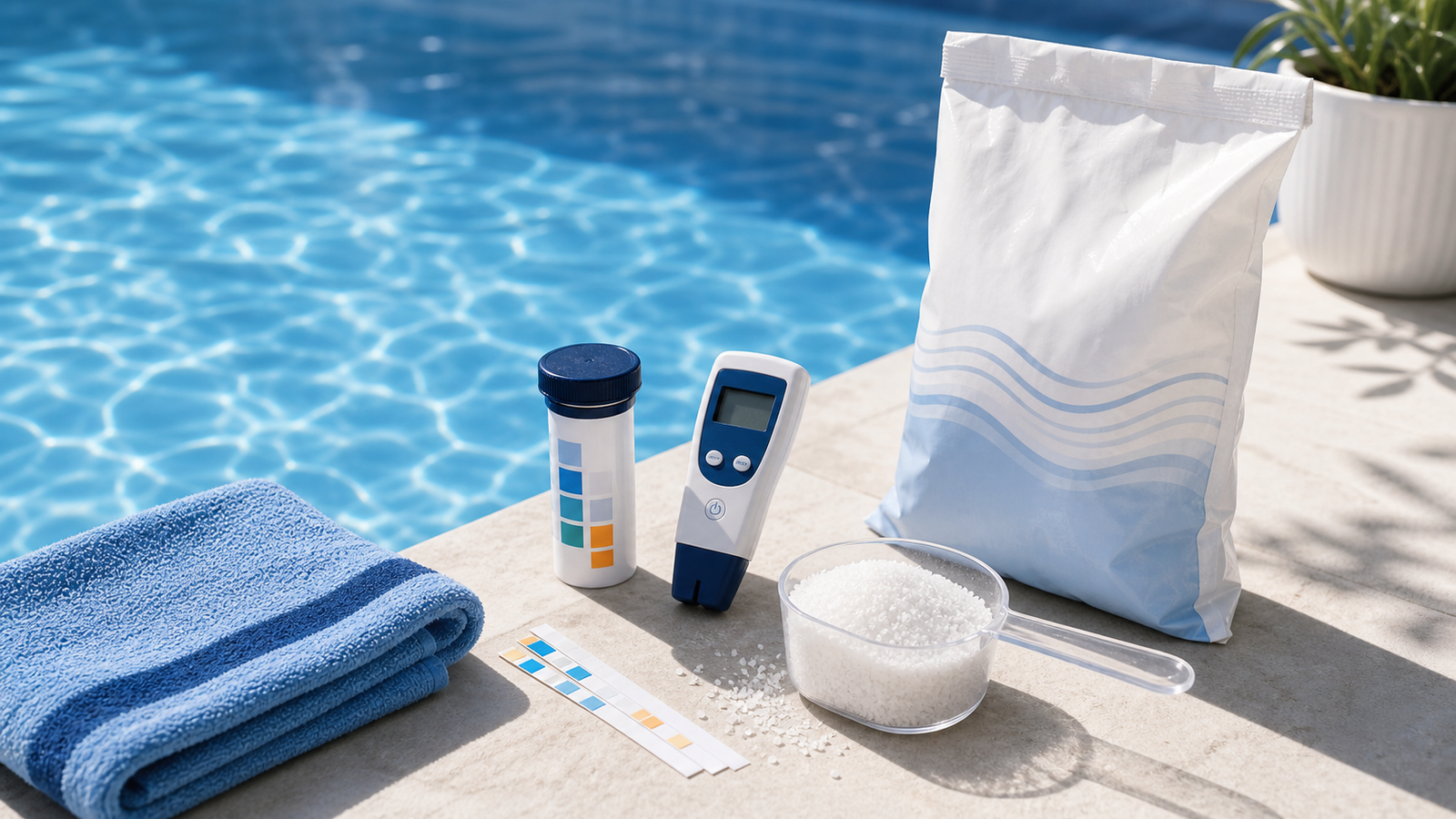
Enter pool volume and salinity readings to calculate total salt needed and number of bags.
Guide
Pool Salt Calculator Guide
Use this swimming pool salt calculator to estimate salt additions from pool volume and salinity readings. It works in gallons and pounds or liters and kilograms for a pool salt calculator metric workflow.
What is the Ideal Pool Salinity?
The ideal pool salinity depends on your saltwater chlorine generator. Many residential systems operate near 3,000 to 3,600 ppm, but the correct target is the number specified by your exact equipment manual.
As common reference points, Hayward AquaRite systems often list 2,700 to 3,400 ppm with 3,200 ppm as optimal, Pentair IntelliChlor guidance commonly recommends 3,600 ppm, and Intex salt tables commonly target 3,000 ppm. Treat these as brand examples, not a substitute for your specific model instructions.
How to Use This Pool Salt Calculator
- Enter your pool volume and choose gallons or liters.
- Add the current salt level from a reliable test strip or digital salinity test.
- Enter the target ppm recommended for your saltwater chlorine generator.
- Use the salt bag size you plan to buy so the bag count is useful.
- If current salt is already above target, do not add salt.
- High salt is usually corrected by partial drain-and-refill, then retesting after circulation.
Salt Pool Calculator for ppm, Bags, and Additions
This tool also fits salt pool calculator, salt water pool calculator, and how much salt to add to pool calculator searches. The important inputs are pool volume, current salt reading, target ppm, and the size of the salt bags you plan to buy.
If the calculator says the current ppm is already above target, do not add salt. Circulate, retest, and follow the equipment manual before making a drain-and-refill decision.
The Pool Salt Calculation Formula Explained
The formula starts with the ppm increase needed. PPM means parts per million, so a small ppm change can still require a meaningful amount of salt in a large pool.
Salt increase needed = target ppm - current ppm This is the salinity gap the calculator needs to close.
Gallons: salt needed (lb) = ppm increase x gallons x 8.34 / 1,000,000 The 8.34 factor is the approximate weight of one gallon of water in pounds.
Liters: salt needed (kg) = ppm increase x liters / 1,000,000 This metric formula follows the ppm relationship of milligrams per liter.
Bags required = salt needed / bag size, rounded up Rounding up helps avoid coming up short during a maintenance adjustment.
How to Properly Add Salt to Your Pool
Test the water first, calculate the amount, then add salt gradually across the pool surface instead of dumping it in one pile. Brush visible piles so salt does not sit on the finish, and keep the pump running while the salt dissolves and circulates.
It is usually better to add slightly less than the full estimate, circulate, retest, and then make a smaller final adjustment. This is especially helpful when the pool volume is estimated rather than precisely measured.
What Happens if You Add Too Much Salt?
A high salt level can make a saltwater generator shut down or show a high-salt warning. Excess salt can also increase corrosion risk for certain metals, equipment, and surfaces if the water is not managed correctly.
Because salt remains in the water as water evaporates, the usual way to lower salinity is partial drain and refill. After dilution, circulate the pool and retest before making another adjustment.
FAQ
Pool Salt Calculator FAQs
Quick answers about pool salinity, salt type, circulation time, and high-salt corrections.
What is the recommended ppm for a saltwater pool?
Many saltwater chlorine generators run near 3,000 to 3,600 ppm, but the right target depends on the exact cell and control system. Use the target listed in your model manual whenever possible.
Can I use regular table salt or water softener salt in my pool?
Use high-purity sodium chloride made for pools, or additive-free water softener salt only when it meets your equipment guidance. Avoid iodized table salt, rock salt, potassium chloride, calcium chloride, and salts with anti-caking or stain-causing additives.
How long should I run the pump after adding pool salt?
Run the pump long enough for the salt to fully dissolve and mix through the pool. A common practical rule is to circulate for about 24 hours before trusting the generator reading or retesting.
How much salt should I add to my pool?
Use the pool volume, current ppm, target ppm, and salt bag size. The calculator finds the ppm gap, converts it to pounds or kilograms of salt, and rounds the result into practical bag counts.
Why does my saltwater generator say "Low Salt" after I just added some?
Salt readings can lag while the water mixes, and sensors may use averaged readings. Keep the pump running, brush undissolved salt, wait for circulation, and confirm with an independent salt test if the reading still looks wrong.
How do I lower the salt level if I added too much?
Salt does not evaporate out of pool water. The usual correction is to partially drain and refill with fresh water, then retest before making any more adjustments.