
Construction calculator
Fence Calculator
Use the Fence Calculator to estimate linear feet, posts, pickets, panels, chain-link materials, concrete, paint or stain, and project cost for wood, vinyl, chain-link, metal, and more.
Result
Fence calculator results
Your results will appear here
Enter your values and click Calculate to see the result.
Fence material estimate
Total linear footage
Installed fence run
Fence height
Gate count
Calculation breakdown
The estimate follows the same linear-foot, spacing, coverage, concrete, finish, and pricing steps you would use by hand.
This fence calculator is a planning estimate. Material counts, post spacing, concrete needs, gate hardware, finish coverage, and installed cost can all shift with terrain, local practice, and the exact products you buy.
Calculator overview
Quick Fence Calculator Overview
Use this fence calculator to estimate posts, rails, pickets, panels, concrete, finish, and cost from fence length, height, spacing, and style. It supports common fence layouts without turning the page into a contractor bid system.
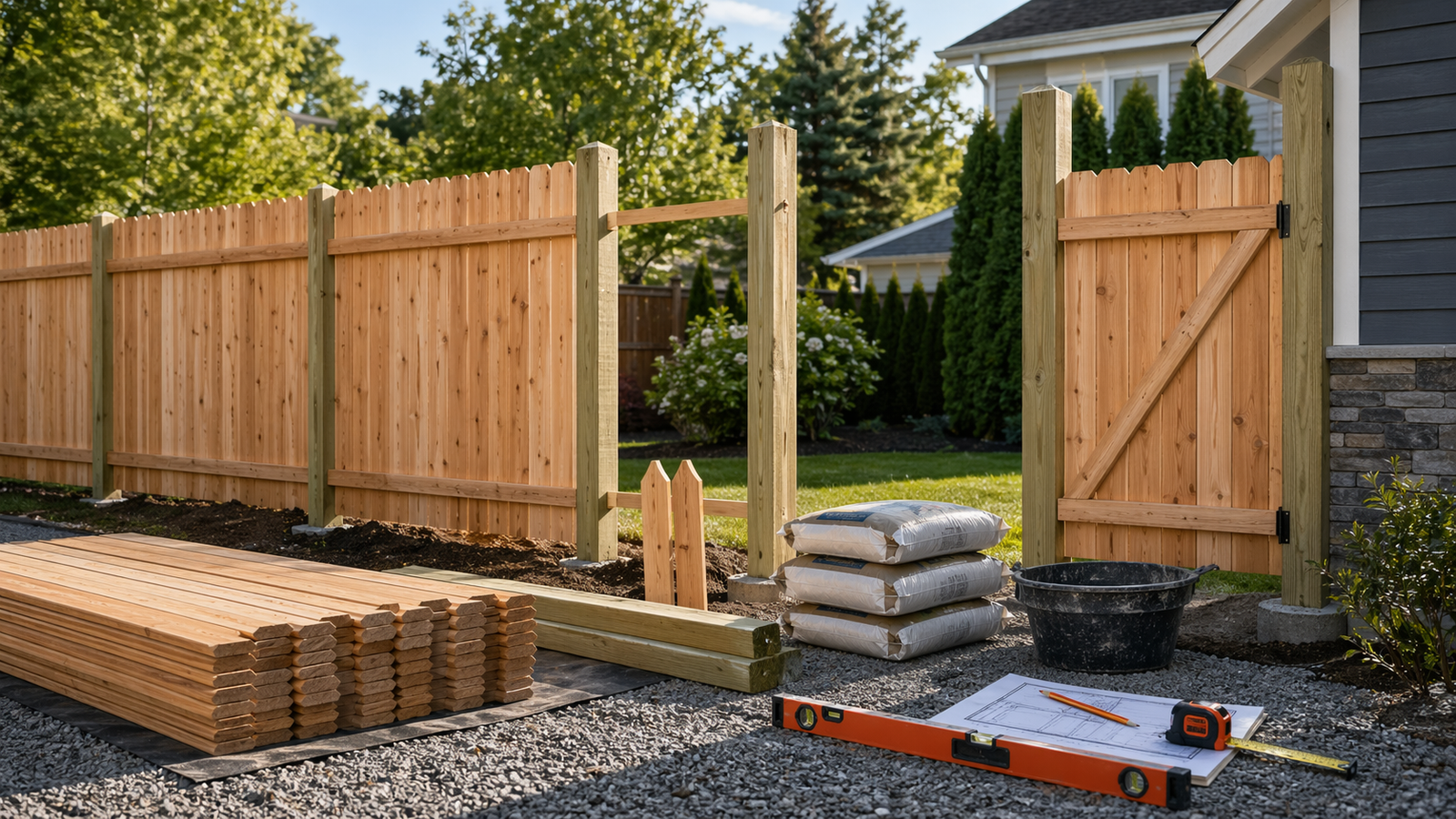
Enter the fence run and style details to estimate material counts and compare project costs.
Guide
Fence Calculator Guide
Use this guide to understand how fence length turns into sections, posts, concrete, finish coverage, and planning cost, and why different fence styles need different estimating rules.
What This Fence Calculator Does
This fence calculator estimates fence materials and project cost from total fence length, multi-run fence layouts, fence height, gate openings, style-specific spacing, and optional post-hole or pricing inputs. It can work as a wood fence calculator, chain link fence calculator, vinyl fence calculator, privacy fence material calculator, fence post calculator, fence post concrete calculator, and fence installation cost calculator without splitting the page into retailer-specific tools.
The calculator keeps the layout math separate from the purchasing math. First it finds the real fence run after gate openings are removed. Then it applies spacing or coverage rules for the selected fence type, adds waste for ordering material, and layers in optional concrete, paint or stain, labor, repair, and replacement costs.
Planning note
Costs are estimates only. Fence height, terrain, corner layout, gate hardware, local labor rates, and the exact products you buy can all change a real quote.
How Fence Measurements Work
Fence estimating starts with linear footage. Measure the total perimeter or add each straight run, subtract gate openings from the infill length, then convert that remaining fence run into sections, panels, boards, rails, fabric, wire, posts, or concrete.
Core fence workflow
installed fence run = total fence length - total gate width Sections or spansceil(installed fence run / section width or post spacing)
Wood boards(installed fence run x 12) / (board width + spacing)
Concretepi x radius² x hole depth x number of posts
Waste-adjusted order lengthInstalled fence run x (1 + waste%)
That is why a fence material calculator cannot use one universal formula for every style. Wood picket, board-on-board, vinyl panel, split rail, chain-link, and wire fences all depend on different spacing or coverage assumptions.
Fence Materials by Style
Wood privacy and picket fences estimate from section width, board width, spacing, and rails per section. Shadow box and board-on-board styles use more boards than a single-sided fence because they build visual coverage from both sides. Vinyl, pool, and ornamental fences estimate more like panel systems, where panel width and post count matter most.
Chain-link fences estimate from fabric length, line-post spacing, terminal posts, top rail, and concrete. Split rail and post-and-rail fences focus on post spacing and rails per span, while farm or wire fences add wire rows across long runs. Keeping those formulas separate makes the result more trustworthy than pretending every fence uses the same board or panel count.
How to Use the Calculator
- 1 Choose the project type and fence style
Select new fence, replacement, repair, post and concrete only, or paint and stain only, then pick the fence type that matches the job.
- 2 Measure the fence length
Use total linear feet for a quick estimate or add each fence run one at a time for a more detailed layout.
- 3 Account for gates
Enter gate count and width so the calculator subtracts those openings from infill material while still keeping their post and cost impact.
- 4 Add style-specific spacing
Wood fences need picket, rail, and section inputs. Panel fences need panel width. Chain-link needs line-post spacing. Rail and farm fences need post spacing and rows.
- 5 Add post-hole, finish, or cost fields if needed
Use hole diameter and depth for concrete, finish coverage for paint or stain, and linear, panel, post, or component rates for planning cost.
- 6 Click Calculate
The result panel will show layout summary, material counts, posts and concrete, finish estimate, cost breakdown, and a clear step-by-step calculation summary.
Example Calculation
Here is a sample 6 ft wood privacy fence estimate using 120 ft of total length, 1 gate at 4 ft, 8 ft sections, 5.5 in boards with a 0.25 in gap, 3 rails per section, and an 8% waste allowance.
Installed fence run 116 ft Posts 17 Boards to order 262 Concrete bags 31
Example result
262 boards $5,380 using the first pricing method plus shared adders.This sample shows how one fence estimate can move from linear footage into boards, rails, posts, concrete, and cost without mixing every fence style into one generic formula.
Tips / Notes
Gates change more than the opening
Gate openings reduce infill material, but they still add posts, hardware, framing, and cost.
Post spacing affects nearly everything
Section count, post count, rails, chain-link runs, and concrete all change when spacing changes.
Concrete depends on hole size, not just post count
A few inches of extra hole diameter or depth can materially change the total concrete volume and bag count.
Finish estimates depend on coats and coverage
Fence paint calculators and stain calculators work best when you use the product label coverage, not a guessed universal rate.
Repair pricing is less exact than full replacement
Patch work, matching materials, and minimum-call labor can make repair jobs less predictable than new fence runs.
Waste is part of ordering
Extra boards, rails, spare panels, fabric overlap, and cut loss all make a waste allowance useful for purchase planning.
Wood, Vinyl, Chain-Link, and Wrought Iron Cost Factors
Wood fence cost depends on board count, rails, posts, concrete, stain, and labor. Vinyl fence installation cost usually leans more heavily on panel price, posts, gates, and layout constraints. Chain-link projects often price from fabric, terminal posts, top rail, and gates. Ornamental metal or wrought iron fences usually carry higher panel and gate costs, while repair and replacement estimates often add tear-out, disposal, or matching allowances that new-fence projects do not need.
FAQ
Fence Calculator FAQs
These short answers cover common fence material calculator, fence post calculator, and fence installation cost calculator questions.
How do I calculate fence materials?
Start with the full fence length or perimeter, subtract gate openings, choose the fence style, and then apply the spacing or coverage rules that match that style. Wood fences often use picket, rail, and section math, while chain-link uses fabric length, post spacing, and terminal posts.
How many posts do I need for my fence?
Post count depends on fence length, section or panel width, whether the fence is a closed loop, and how many gates break up the run. Gates usually add posts, while panel width or post spacing controls how many spans the fence needs.
How do I estimate chain-link fence materials?
A chain-link fence calculator uses actual fence run length after subtracting gates, then applies line-post spacing, corner and end conditions, terminal posts, top rail, fabric length, and concrete for the post holes.
How much concrete do I need for fence posts?
Concrete volume comes from the hole diameter, hole depth, and number of posts. A common planning approach treats each post hole as a cylinder, then converts the total concrete volume into cubic feet, cubic yards, or bag count.
Can this calculator estimate wood fence pickets?
Yes. For wood privacy and picket fences, it estimates boards or pickets from fence length, board width, spacing, and waste. It also adds rails and posts when those fields are provided.
Can I use this calculator for vinyl or wrought iron fencing?
Yes. Choose the vinyl panel, ornamental metal, or pool fence type and enter the installed panel width. The calculator will estimate panel count, posts, gates, concrete, and optional pricing from that layout.
Does the fence cost estimate include labor?
It can if you add a labor cost per linear foot or meter. You can also include repair allowances, replacement or removal costs, concrete bag cost, gate cost, and finish cost when they matter to the project.